
What are you looking for?
Explore our services and discover how we can help you achieve your goals

Explore our services and discover how we can help you achieve your goals
How a regional water utility moved from run-to-failure maintenance to IoT-driven prediction — and put every pump, motor and field device on one asset lifecycle record with Asseto.
Work with this team
/02 Product tour
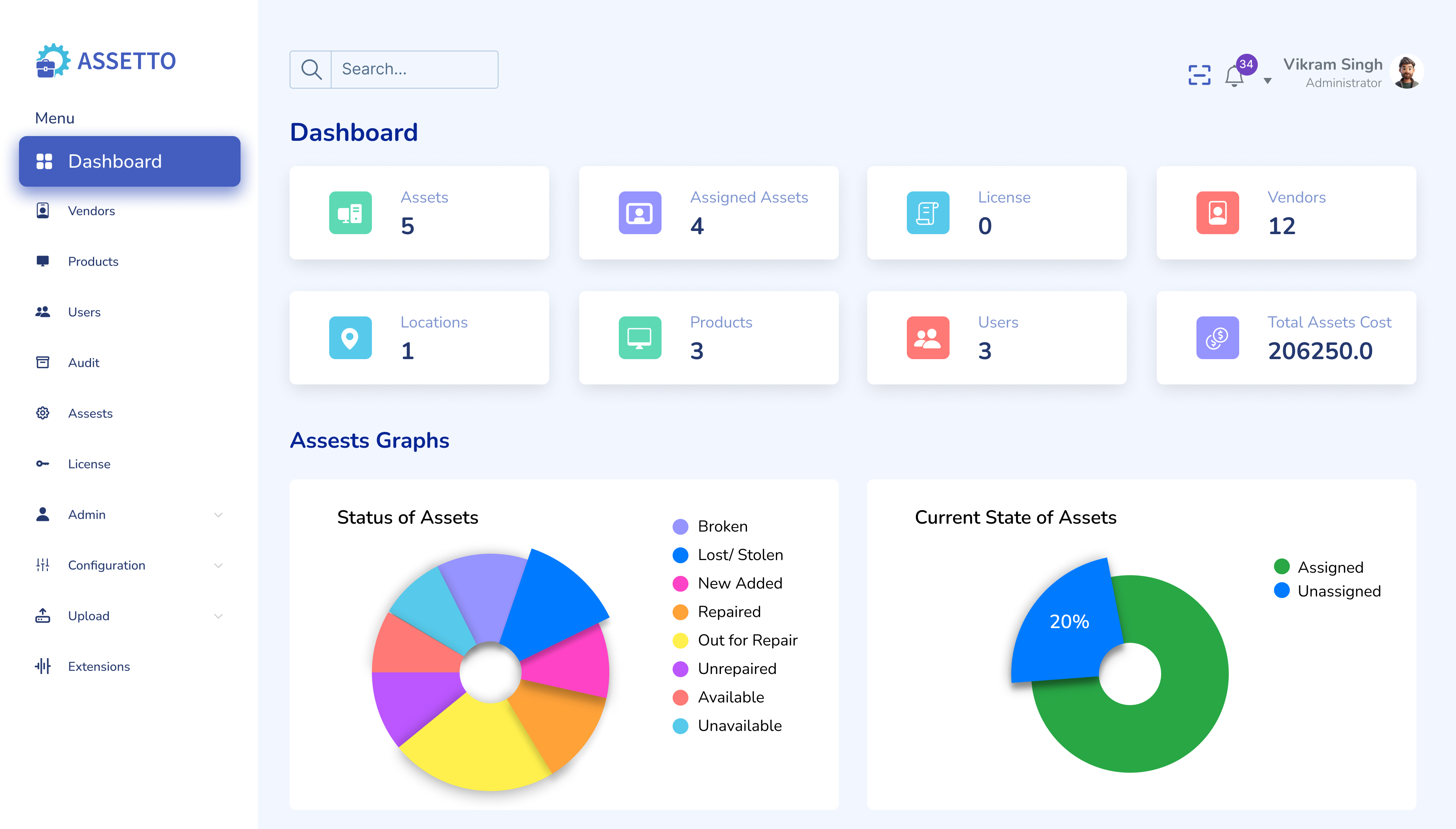
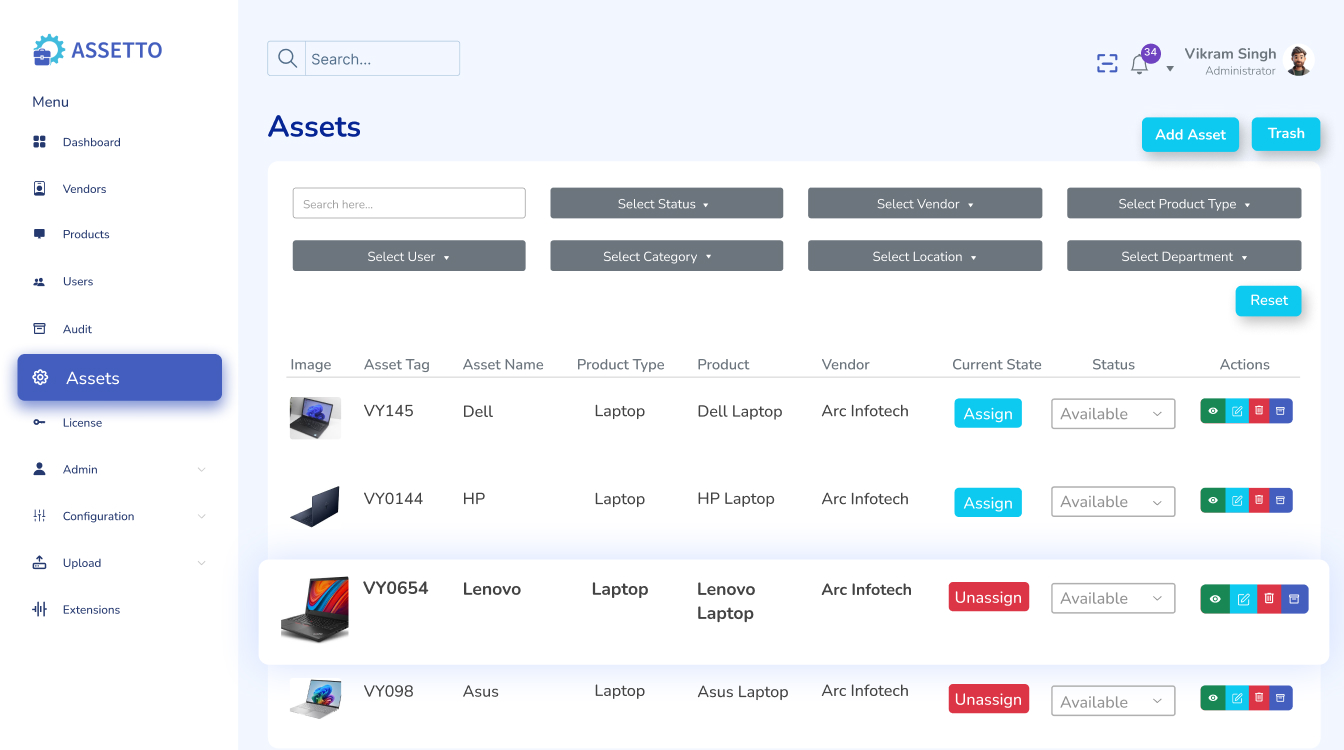
/03 Before
Pumps and motors were serviced on a fixed calendar or when they failed. Calendar servicing replaced healthy parts too early, while failures between services caused outages, emergency call-outs and, in the worst cases, service interruptions for customers.
SCADA alarms told operators when a station had already tripped, not that a bearing was degrading or a motor was drawing abnormal current. There was no condition data trending over time to spot trouble early.
Unplanned failures meant night and weekend dispatches at overtime rates, expedited parts and hire equipment such as temporary pumps — the hidden costs that make downtime far more expensive than the repair itself.
Asset data was split across spreadsheets, a legacy maintenance database and paper job cards. Age, condition, failure history and cost-to-date were unknown for a large share of the fleet.
Field controllers, gateways, rugged laptops and licences were tracked in yet another system, so nobody could see the full set of assets — mechanical and digital — that a single station depended on.
Without failure rates and lifecycle cost per asset, replacement budgets were set by age and anecdote rather than evidence, and regulators' questions about asset health were hard to answer with confidence.
/04 After
Vibration, temperature and motor-current sensors were fitted to the highest-criticality pumps and motors and connected through edge gateways to Asseto, streaming condition data continuously instead of waiting for an alarm.
Asseto's models learn each asset's normal operating signature and flag deviations such as rising vibration or bearing temperature. Assets are ranked by predicted failure risk so planners know which to service first.
When risk crosses a threshold, Asseto raises a work order with the asset's history, likely fault and required parts, so crews arrive prepared and work is scheduled in normal hours rather than as an emergency.
Every pump, motor, controller, laptop and licence now has a single Asseto record covering purchase, vendor, location, assignment, maintenance history, audits and retirement — the core of Asseto's open-source ITAM foundation.
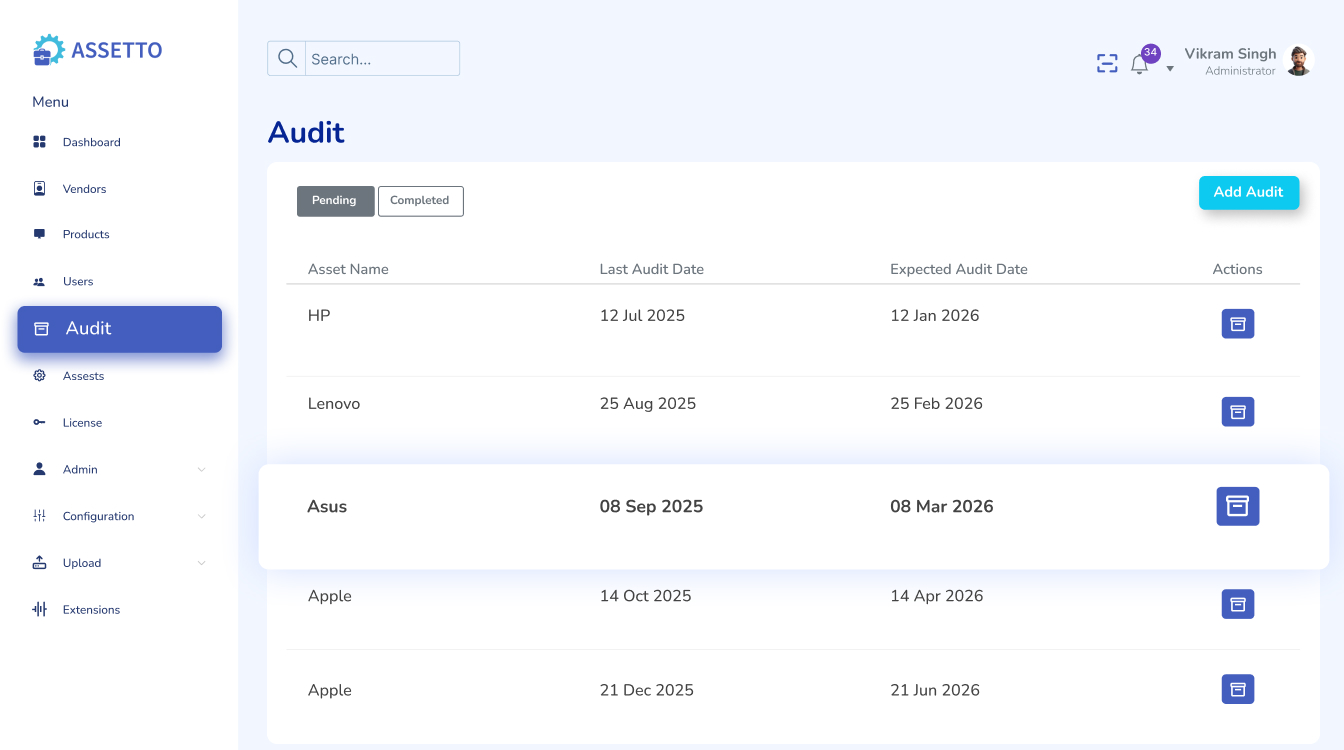
Legacy spreadsheets and database records were bulk-imported and cleaned, and Asseto's audit scheduling now tracks when each asset was last verified and when it is next due.
Maintenance cost, failure frequency and age are rolled up per asset and per station, giving engineering and finance an evidence base for repair-versus-replace decisions.
/05 Scope
/06 Outcome
Condition-based interventions caught degrading equipment before it failed, turning outages into scheduled maintenance windows.
Fewer night and weekend call-outs, less expedited parts buying and less temporary pump hire.
Every critical mechanical and IT asset now has a complete, current record in Asseto instead of scattered spreadsheets and job cards.
Healthy equipment is no longer opened up on a fixed schedule, reducing wasted labour and the risk of maintenance-induced faults.
Asset verification is scheduled and recorded in Asseto, so overdue audits are visible rather than discovered.
/07 Payoff
Fewer station failures mean fewer interruptions and less risk of pollution or supply incidents.
Planned work in daylight hours replaces urgent night-time repairs at remote sites.
Lifecycle cost and failure data now drive repair-versus-replace decisions and regulatory reporting.
Catching problems early — misalignment, lubrication issues, bearing wear — extends the working life of expensive rotating equipment.
Engineering and IT finally share a single inventory of everything a station depends on, from pumps to controllers and licences.
Asseto's open-source core lets the utility own its asset data and extend the platform without per-seat licensing.
/08 Wrap-up
Reactive maintenance treats every failure as a surprise, and surprises are the most expensive way to run critical infrastructure. By connecting sensors on its most important equipment to Asseto's predictive engine, this utility turned failures into forecasts and emergency repairs into planned work.
Just as important, Asseto gave every asset — mechanical and digital — a single lifecycle record. That combination of condition data and complete asset history is what makes maintenance decisions, capital plans and regulatory answers evidence-based rather than anecdotal.
/09 FAQ
/9 Client testimonials
Vyrazu built an AI agent that handles our entire supplier negotiation workflow. What took a team of 6 analysts now runs overnight, autonomously, with better outcomes than we achieved manually.
Their LLM-assisted migration tool cut our 18-month COBOL replatform to 11 weeks. The AI-generated tests caught edge cases our engineers hadn't even thought of. Genuinely impressive engineering.
The RAG pipeline they built pulls from 40,000 internal documents in milliseconds. Our support team now resolves tickets 3× faster and customer satisfaction scores have jumped 28 points.
We came in sceptical about AI agents in production. Vyrazu's reliability engineering approach — guardrails, observability, fallbacks — gave us the confidence to go live. Zero incidents in 8 months.
Their fraud detection model now catches 99.7% of fraudulent transactions at 2M+ per day. It paid back its entire development cost within the first 6 weeks of going live.
Vyrazu treats AI ROI as a first-class requirement. Every model ships with a business metric attached — cost saved, decisions automated, revenue influenced. That discipline is rare and exactly what we needed.
/10 Get in touch
Looking for a job? This form is for business enquiries — visit our Careers page or email hr [at] vyrazu [dot] com instead.
